

Table of Contents
- My Sugar Craving Story (The Honest Version)
- Everything I Tried That Didn’t Work
- What I Finally Learned About Why I Was Craving Sugar
- How RTT Hypnotherapy Changed Everything
- What Actually Changed After My Session
- The App I Use to Stay on Track
- My Honest Tips for Dealing With Sugar Cravings
- FAQ
Okay, real talk. I used to have a serious thing with sugar. Not like, “I enjoy dessert sometimes” — more like “it’s 3pm, I’m stressed, and I NEED something sweet RIGHT NOW or I cannot function.” Sound familiar?
I tried everything. I white-knuckled my way through sugar detoxes. I swapped my afternoon chocolate for fruit (which worked for about four days before I was elbow-deep in a box of cookies). I read every article about cutting sugar cravings. I downloaded apps. I tried “crowding out” sugar with more protein and fiber. And every single time, eventually, the cravings came back.
It wasn’t until I went through my own RTT hypnotherapy sessions that something actually shifted, and I mean really shifted, not just “I’m being good this week” shifted. I want to share exactly what happened and what I learned, because I genuinely wish someone had told me this years ago.
Tired of fighting sugar cravings that always come back?
You might be surprised what’s actually driving them. Try Mochi Zen free for 7 days — it combines RTT hypnotherapy with nutrition tracking to address cravings at the root.

My Sugar Craving Story (The Honest Version)
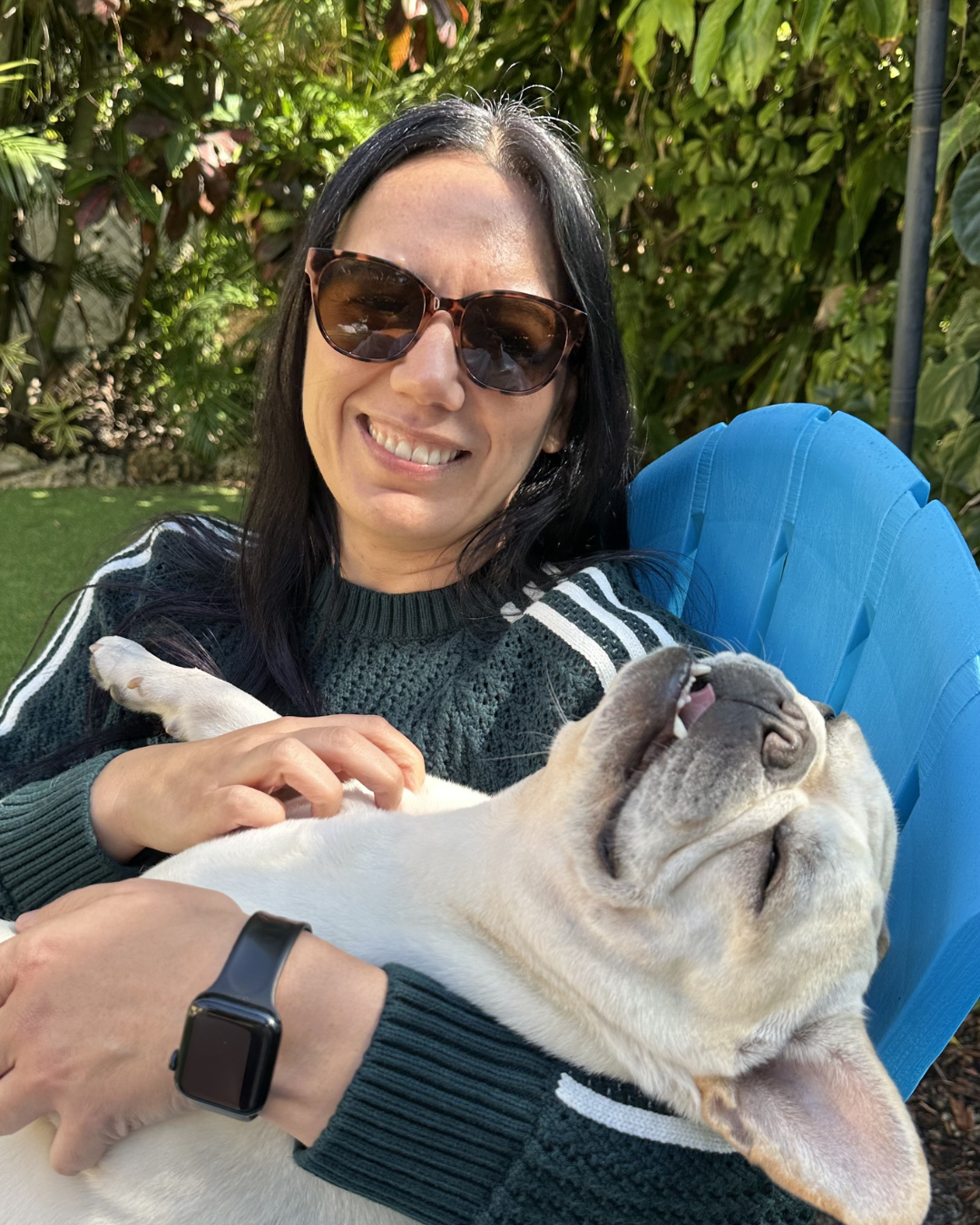
I’m Paola — I run this blog, I’m a certified RTT hypnotherapist, and I’m also the founder of Mochi Zen, a wellness app. But before all of that, I was just a person who could not stop craving sugar, especially in the afternoon and whenever I was stressed or tired.
For me, it was very specific. Afternoons at my desk. Long days. Moments when I felt overwhelmed or bored or just “blah.” That’s when the sugar cravings after meals would hit hardest – not even at mealtimes, but in between, when my brain was looking for a quick escape hatch.
I knew it wasn’t great. I wasn’t oblivious. But knowing and being able to do something about it are two completely different things, and for years I stayed stuck in the same loop: crave, give in, feel guilty, try to be “good,” crave again.
Everything I Tried That Didn’t Work
Just so you know I’m not being dramatic about the “tried everything” part — here’s my actual list:
- Cold turkey sugar detoxes. I made it 11 days once. Was extremely proud of myself. Then stress hit and it was like all 11 days never happened.
- Swapping sweet snacks for fruit. Great in theory. Did not scratch the same itch.
- Eating more protein. Helpful for hunger. Did nothing for the stress-driven craving sweets cycle.
- Tracking everything in a calorie app. Useful data, zero behavior change. I’d see the numbers and still reach for the chocolate.
- Drinking water first. Sometimes effective for hunger. Not effective for emotional eating.
- Just having “a little bit.” One cookie became the whole box every single time.
If you’ve tried any of these, you know what I mean. They’re not bad suggestions. They just don’t work long-term for a lot of people; and there’s a real reason for that, which I’ll get to in a second.
What I Finally Learned About Why I Was Craving Sugar
When I trained as an RTT hypnotherapist, a method developed by world-renowned therapist Marisa Peer, one of the first things I learned is that most of our habits, cravings, and patterns aren’t conscious decisions. They’re subconscious programs we picked up somewhere along the way.
For many people, sugar becomes linked to comfort, reward, or relief from stress very early in life. A sweet treat when you were sad as a kid. Celebrating with dessert. Using food to manage feelings that felt too big. Over time, the brain creates a very efficient shortcut: stress → sugar → feel better. It’s not a willpower problem. It’s a wiring problem.
“You can’t think your way out of a pattern that lives below the level of thought. That’s why most ‘just stop eating sugar’ advice misses the point entirely.”
This was genuinely a lightbulb moment for me. I wasn’t craving sugar because I was weak or undisciplined. I was craving sugar because my subconscious had a very good reason to want it; and no amount of conscious willpower was going to override that without addressing the root cause first.

How RTT Hypnotherapy Changed Everything
I want to be clear about what RTT hypnotherapy actually is, because I know the word “hypnotherapy” makes some people picture a pendulum and someone clucking like a chicken. It’s nothing like that.
RTT (Rapid Transformational Therapy) is a deep, evidence-based therapeutic process that works at the subconscious level. In a session, you get to understand where a pattern came from, often tracing it back to a specific memory or belief, and then rewire the meaning you’ve attached to it. It’s a combination of hypnosis, cognitive behavioral therapy, and neurolinguistic programming, and it works much faster than traditional talk therapy for many people.
Research published in the Journal of Consulting and Clinical Psychology (Kirsch et al., 1995) found that people receiving hypnotherapy lost more than twice as much weight as those in non-hypnosis treatment groups; and the results held at a 2-year follow-up. That’s not nothing.
In my own sessions working with the subconscious patterns around sugar, I was able to see clearly where my sugar craving story had started, what I had actually been trying to get from sugar (hint: it was comfort and relief, not sweetness), and then disconnect that old loop so it stopped running automatically. You can work with a practitioner like me at Pao Hypnosis for a personalized one-on-one RTT session, or use the hypnotherapy audio sessions inside Mochi Zen if you want to start exploring this on your own.
Want to understand what’s really behind your sugar cravings? Book a private RTT session with me at Pao Hypnosis — we’ll get to the root of it together.
What Actually Changed After My Session
I want to be honest about what this looked like in real life, because I’m not here to sell you magic.
The afternoon craving didn’t disappear overnight. What changed was the quality of it. Before, it felt urgent — almost like anxiety, like I HAD to have something sweet or I couldn’t focus. After my sessions, the same moment would come and I’d notice it, and then it would just… pass. Like a wave instead of a current I was caught in.
Over several weeks, the frequency dropped significantly. I stopped buying boxes of cookies at the market. I stopped keeping chocolate at my desk. I stopped thinking about sugar constantly. And when I did have something sweet, I actually enjoyed it instead of immediately feeling guilty about it.
The biggest shift was emotional: I stopped using food to manage my feelings. That sounds simple. It was not simple. It was probably the most meaningful change I’ve made in my relationship with food in my entire adult life.
The App I Use to Stay on Track
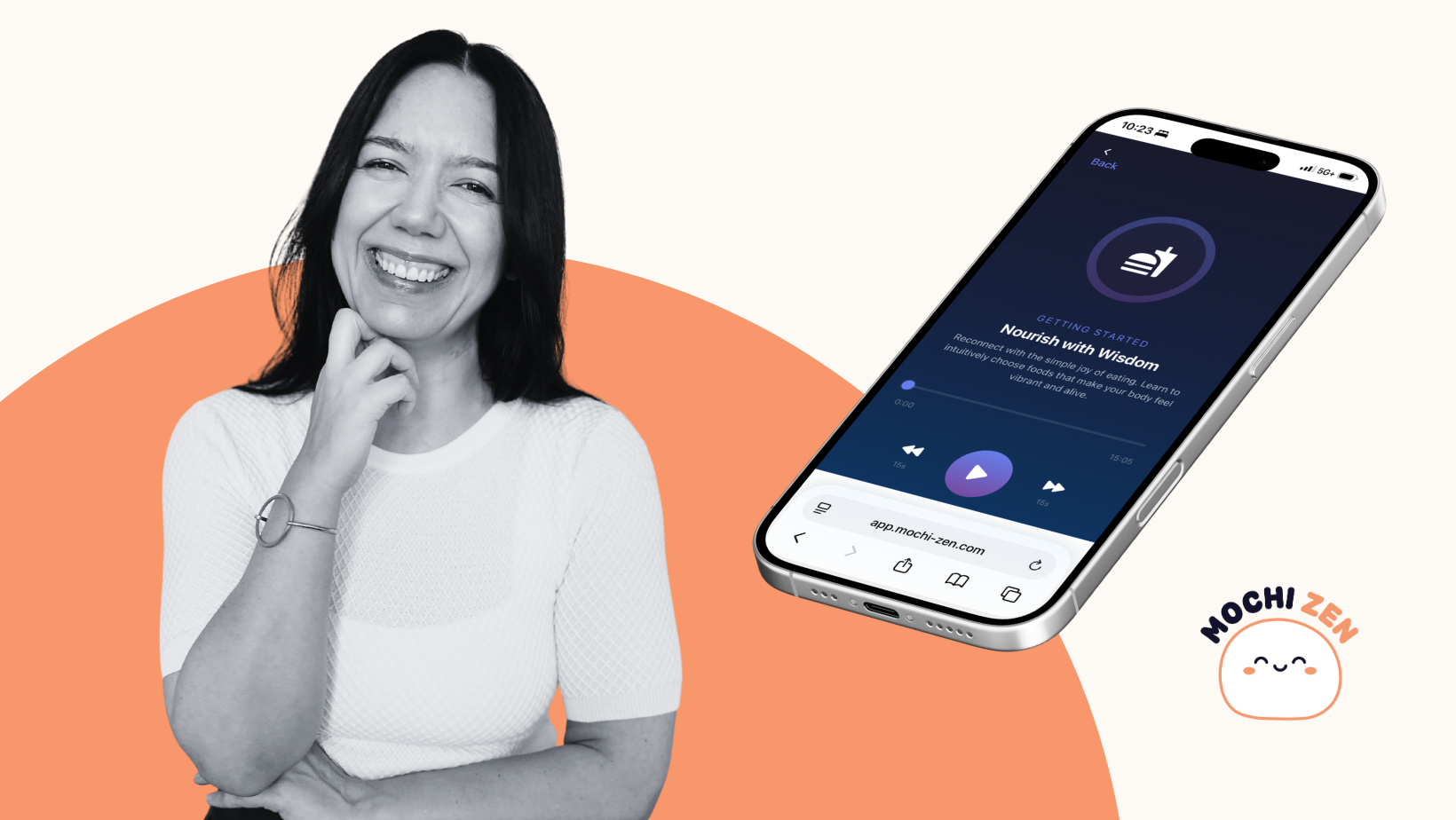
After going through this transformation personally, I built Mochi Zen because I wanted to give other people a way to do this without necessarily booking a full one-on-one session first (though those are incredible — just saying).
Mochi Zen combines RTT-based hypnotherapy audio sessions with an AI nutrition tracker — meal scanner, macros calculator, weight tracker, and daily journal. The idea is that you address the why (subconscious patterns driving cravings) and the what (what you’re actually eating) at the same time.
I use the daily journal in the app to notice what’s happening emotionally when cravings hit — because for me, there’s almost always something underneath. And the hypnotherapy sessions help keep the subconscious patterns from quietly rebuilding themselves.
It’s available at mochi-zen.com, and there’s a 7-day free trial if you want to try it.
My Honest Tips for Dealing With Sugar Cravings
In case you want some practical things to try while you explore the deeper work:
- Notice what’s happening when the craving hits. Tired? Stressed? Bored? Lonely? The craving is usually a signal about something else.
- Don’t try to white-knuckle it. Willpower is a finite resource. You need a strategy that doesn’t rely on it.
- Address the emotional driver. If you’re stress-eating, find something that actually relieves the stress – even a 5-minute walk, a breathing exercise, or a quick journal entry.
- Be curious about your cravings instead of scared of them. Ask: what does this craving feel like in my body? What am I actually looking for right now? The answer is often illuminating.
- Give yourself permission to not be perfect. Guilt makes the cycle worse. Curiosity breaks it.
FAQ
Can you really stop sugar cravings permanently?
For many people, yes — especially when you address the subconscious patterns driving the cravings rather than just trying to resist them with willpower. RTT hypnotherapy has helped many people significantly reduce or eliminate sugar cravings by working at the root cause level. Results vary depending on the individual and how deeply the pattern is wired in.
Why do I crave sugar when I’m stressed?
Sugar triggers a dopamine release in the brain, which creates a temporary feeling of relief or reward. Over time, the brain learns to associate stress with sugar as a quick fix — and that loop becomes a subconscious habit. The craving isn’t really about sugar; it’s about the relief you’re looking for.
Does hypnotherapy actually work for sugar cravings?
Research suggests it can be highly effective. A study published in the Journal of Consulting and Clinical Psychology (Kirsch et al., 1995) found that people using hypnotherapy for weight-related issues lost more than twice as much weight as the control group, with results holding at a two-year follow-up. RTT hypnotherapy specifically targets the subconscious beliefs and patterns driving food behaviors.
What is RTT hypnotherapy and how is it different from regular hypnosis?
RTT (Rapid Transformational Therapy) was developed by world-renowned therapist Marisa Peer. It combines elements of hypnosis, cognitive behavioral therapy, and neurolinguistic programming to produce faster, deeper change than traditional talk therapy. It’s not about being “under someone’s control” — you’re awake, aware, and in a deeply relaxed state that allows the subconscious mind to be accessed and reprogrammed.
How many RTT sessions do I need to stop sugar cravings?
Many people see significant shifts in one to three sessions. A single 90-minute RTT session with a certified practitioner can address the core subconscious pattern. For deeper or more complex patterns, a series of sessions may be helpful.
What’s the fastest way to stop sugar cravings?
There’s no magic overnight fix, but addressing the emotional and subconscious drivers tends to produce faster results than dietary changes alone. Combining RTT hypnotherapy with a nutrition tracking tool (like Mochi Zen) gives you both the inner work and the practical support at the same time.
Is Mochi Zen suitable for people without experience with hypnotherapy?
Absolutely. Mochi Zen was designed for people who are new to hypnotherapy; curious, maybe a little skeptical, and ready to try something different. The RTT audio sessions guide you through the process, and you can use the app alongside one-on-one sessions or on its own.
Where can I find a certified RTT hypnotherapist in Miami?
I offer private RTT hypnotherapy sessions in person in Miami and virtually for clients everywhere. You can learn more and book a session at paohypnosis.com.
Ready to stop fighting your cravings and finally understand them? Start your free 7-day trial of Mochi Zen — RTT-based hypnotherapy meets AI nutrition tracking, in one app.
About the Author
Paola Mendez is a certified RTT (Rapid Transformational Therapy) hypnotherapist trained by world-renowned therapist Marisa Peer, and the founder of Mochi Zen. She runs her private hypnotherapy practice, Pao Hypnosis, seeing clients in person in Miami and virtually. She also runs Coral Gables Love, a local lifestyle blog celebrating the best of Miami-Dade.
Health Disclaimer: This post is for informational purposes only and does not constitute medical advice. RTT hypnotherapy is a complementary wellness practice and is not a substitute for professional medical treatment. Always consult with a qualified healthcare provider before making changes to your health or wellness routine. Results from hypnotherapy vary by individual.



No Comments